
Throughout my personal journey in golf, which is now in its 53rd year, it has become clear that knowledge is the foundation upon which any success I have experienced is built. Looking back, I realize that knowledge has structure, and it is that structure that keeps learning clear, precise, and meaningful. Whether you are just beginning to play this game or have been an avid golfer for years, I suggest that you base your game on a solid foundation of knowledge rather than relying on the all-too-common tip of the day.
After many years of being immersed in style-based instruction, I began to recognize that golfers bring preconceived concepts to the practice range, golf course, and lesson tee that are fundamental to their skill development and progress (or lack thereof). More often than not, a golfer’s concepts are acquired from random and disconnected information, which is very different from most subjects we learn in life.
For example, consider driving a car. Chances are, it began with some understanding of what the steering wheel, gas pedal, clutch (yikes), brake, and shift lever were for and how they functioned. There were likely test drives in empty parking lots, then in light traffic, and eventually in more complex situations. Before long, you were on your way to a predetermined destination, thinking about what to get for dinner that night, without a single thought about how to drive—and somehow, you arrived at your destination safely without any incidents. What happened was that you developed a clear and precise structure of knowledge about driving a car, built from small to large, slow to fast, and simple to complex. Over time, this process allowed you to perform the intricate task of driving with utmost ease!
However, when learning the subject matter of golf, concepts are typically formed without moving from small to large, slow to fast, or simple to complex. Typically, golfers begin learning HOW to swing. Things like “keep your left arm straight”, “keep your head down”, “shift your weight”, and “finish on balance” become the concepts for HOW they must move to hit the ball. If the ball flight results are undesirable, more golf swing information is added, such as “cock your wrists”, “keep your knees flexed”, “don’t sway”, and soon the golfer’s mind is swimming in a virtual soup of commands meant to produce a golf shot that flies straight and true. Sometimes, one of these tips of the day works, leading the golfer to believe that more tips are beneficial. However, when shots go astray, they add another and another, until they find themselves right back in the soup!
Since concepts are essential for developing golf skills, I believe it is crucial for golfers to clearly understand two concepts before embarking on or continuing their journey in the game. These concepts are straightforward and rooted in knowledge, making them a great place to start.
Concept #1 – What makes a golf ball FLY
A golf ball is round and can roll or fly, depending on where it is hit by the clubface. If it rests on the ground and is struck below the equator, it flies; if it is struck on or above the equator, it rolls.
Concept #2 – What the Golf Club does to create Ball Flight
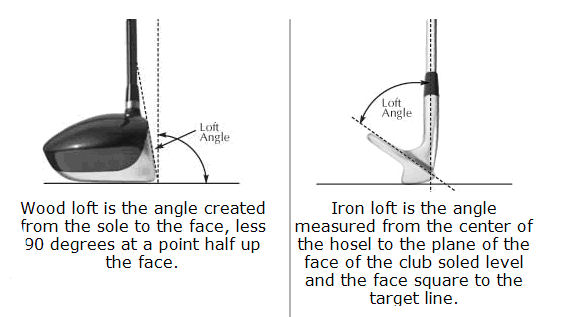
The clubhead features a flat surface known as the “clubface”. If the top of the face is tilted away from the target, this is referred to as “loft”. If the clubface swings to the ball such that the ball is struck on the flat surface, loft ensures the ball will be struck below its equator – so it flies.
Below are high-speed photos of impact with a Driver, middle iron, and more lofted short iron. You can clearly see that the ball is contacted below the equator and the ball is compressed (flattened at the point of impact). This results in launch and spin (flight) characteristics unique to the club used.
These two simple concepts, built on a foundation of knowledge, enable golfers to develop sound fundamentals that can lead to consistent ball striking and an enjoyable day on the golf course.
Knowing WHAT makes a ball fly and WHAT the club has to do to produce flight provides the clarity for intention when striking a golf ball; in turn, it provides the best chance to reach desirable outcomes in ball flight.

Knowing WHAT is not, however, knowing HOW. Know HOW is the stuff of learning through doing. Knowing HOW to hit a 250-yard drive, or a 175-yard five-iron, straight toward a target, stems first from knowing WHAT the club has to do to the ball to create the desired flight. From there, one can set about developing HOW to get the job done.
It is here that it becomes clear why knowledge is a primary component of my teaching philosophy. It has been the norm in golf instruction that information regarding HOW was given priority. Just look at any golf magazine, Golf Channel Academy, or search Google for golf instruction, and the content is overwhelming on HOW to swing a golf club. It has been my experience that most golfers know more about how to swing and what they do wrong than ever before, and yet they remain confused about what to change to turn a nagging slice into a beautiful draw. And, they continuously return to the source of their confusion for guidance; more magazines, more academies, more content, more information.
I suggest a simple solution: get your concepts straight on WHAT you are doing with a golf club to a golf ball, know WHAT the club must do to give you a desired result, then get on with doing that…and you will see a change for the better. HOW you swing will become a function of WHAT you intend to do with the club to hit the ball where you want it to go.
Know WHAT before you Know HOW!
I love the high speed photos, which clearly show how the clubface creates flight. I had always (falsely) believed that the clubface compresses the ball downward against the ground, which then creates the backspin that causes flight. These pictures show clearly the truth!
Based on those pics, something interesting occurs to me. Since the clubface contacts the ball below the equator for any shots that fly, and since the golfer’s eyes are above the equator, then the golfer never can truly see impact. The best the golfer can do is to look at the back of the ball, and realize that impact will occur somewhere below (or underneath) that point, but it will always be out of sight for the golfer.
Thank you for your comment, Steve. As you stated, “the golfer never can truly see impact.” Understanding what the club must do to achieve the desired flight can sharpen the golfer’s focus on the task at hand. For an iron strike, the goal is to bring the clubface down to the back of the ball (as you mention). I suggest that where one looks is subjective. Often, looking through the ball to where the leading edge will make contact with the ground can enhance success at gathering the golf ball on the center of the clubface. Additionally, impact being “out of sight” may actually be more common in striking tasks. Think of driving a nail, hitting a grounder or fly ball in baseball, or executing topspin and cut shots in tennis or ping pong. Because impact happens in a flash, I suggest that where the strike on the ball (or nail) occurs is influenced by the player’s intent regarding face alignment, which, if they have some experience, likely results from their intention for how they want the ball (or nail) to react. Enjoy the pursuit!
This is so good to have in written text. I’m first understanding that I need to “understand”. Good stuff. Thank you for sharing.
Thank you for your comment, Samantha. I have found that understanding changes outcomes, usually for the better. All the best to you in your journey. Stay in touch as I am happy to help if I can.
12/4/2019
Thank for the information this just confirm there power in knowledge, knowing what before the how is a very simple concept to follow and easy to understanding. I will continue to followup with your website to increase my knowledge of the game to help with when playing golf.
Thank you for your comment, Wesley. All the best to you as you progress toward more enjoyable golf!